Why a Starting Price Isn't a Quote: What Actually Decides the Cost of Permanent Lights in Calgary
The short answer: A starting price describes a starting scope, not necessarily your home. A front roofline with straightforward access is different from a full wrap with peaks, corners and upper-storey access. Before comparing numbers, compare the measured coverage, installation requirements and written inclusions. A useful quote explains what you will receive and what still needs to be confirmed.
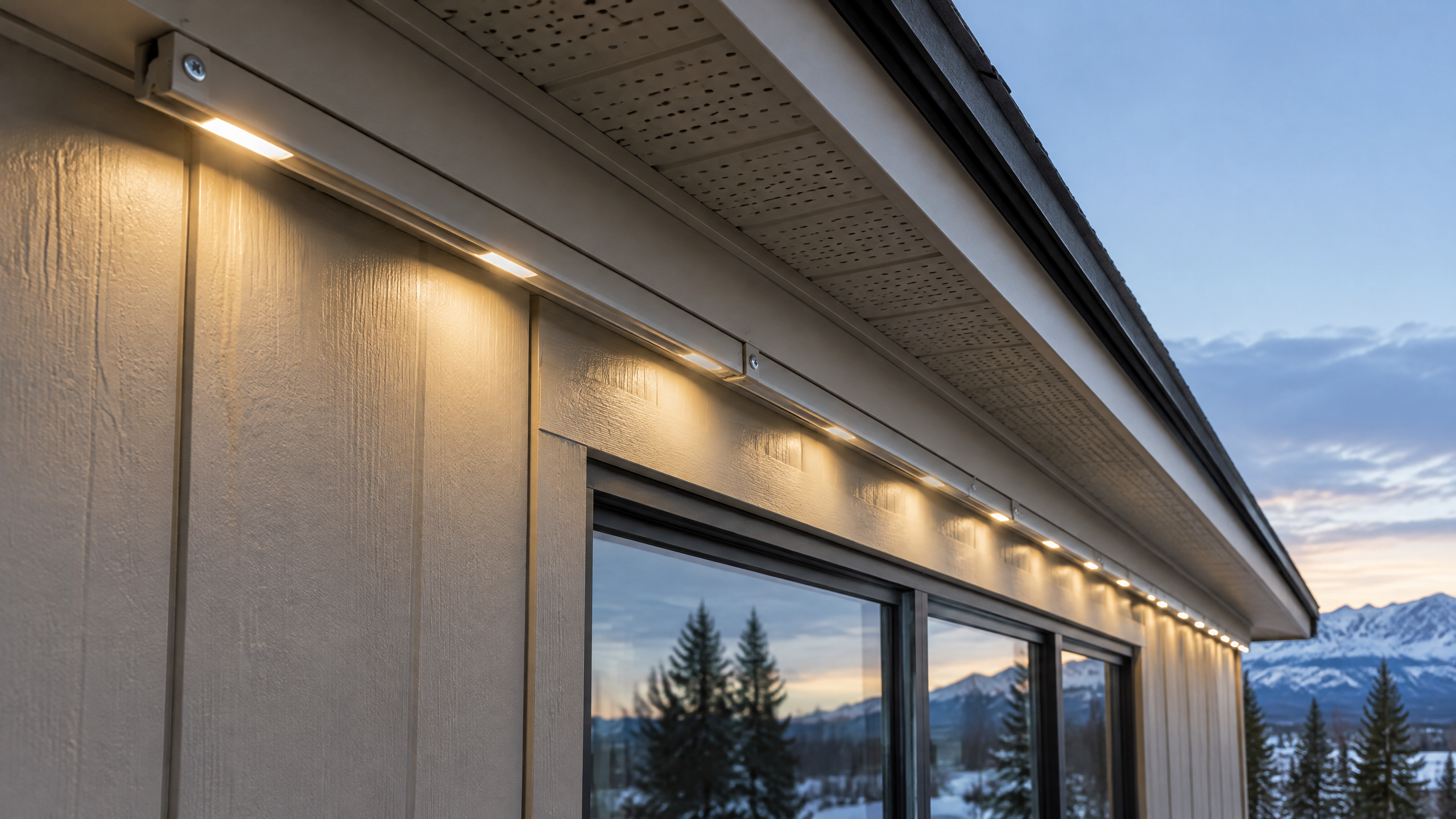
It is easy to picture the finished result: a welcoming Calgary home, a roofline that feels complete and lights ready for Christmas, Canada Day or an ordinary evening. The harder part is knowing whether the headline you saw describes that result. As the owner of Frontline Lighting, I want homeowners to ask that question before booking, not after plans are underway.
1. What a starting headline may actually cover
For an offer built around a simple starting scope, the assumption may be the front roofline only, with the simplest access. That is a useful way to understand the difference between an entry point and a property-specific quote. It is not a universal rule about lighting offers. Read the particular offer's inclusions and ask what home, coverage and access assumptions sit behind its headline.
“Front roofline” also needs a definition. Does it mean the main horizontal edge, or every visible peak and return? Does the garage count? What about the short side section you see when approaching the driveway? Those are scope questions, not details to leave until installation day.
Start with your own goal. Perhaps you want the street-facing outline to feel finished. Perhaps the side entrance and backyard matter just as much. Neither choice is automatically the right one. The useful comparison is between proposals describing the same areas, with the same unresolved questions made visible.
A starting headline can open a conversation. It cannot replace measurements and a written description of your home. If an inclusion is unclear, ask for it to be named rather than filling the gap with an assumption.
Before the consultation, walk around the house and note where you actually want to see light. Take a wider view as well as close-up photographs, and separate essential coverage from areas you are only considering. That simple preparation gives the conversation a clear starting point. It also helps you spot a proposal that answers a different question from the one you meant to ask.
2. The six factors that shape a real quote
These six factors help explain why the finished scope matters more than a headline. They are a checklist for a conversation, not a formula for calculating a price yourself. For another planning reference, see our guide to permanent lighting cost factors in Calgary.
Roofline length, peaks and corners
Two homes can look similar from the street while presenting different lighting routes. A straight edge is not the same layout as several peaks, corners and returns. Ask which edges were measured and which were left out. A marked photograph or a clear written description can help everyone discuss the same outline rather than relying on “the front” as shorthand.
Storeys and access
Height is only part of the access question. The installer also needs to understand how the selected roofline can be reached, including the space around the home and any obstacles along the planned route. Describe the property as it is, not just as it appears in a cropped photo. Ask how access affects the proposed installation plan and what needs checking in person.
Front-only coverage or a full wrap
A front-only plan and a full wrap are different scopes, even on the same house. Decide which views matter: the street, driveway, side entrance or backyard. Then ask the installer to name the included sides. If you are undecided, discuss separate scope options so that you can understand the coverage trade-off without accidentally comparing unlike proposals.
Track colour-matching
The daytime appearance deserves attention too. Frontline uses fully encased aluminum tracks colour-matched to the home. Confirm the intended colour and where the tracks will run before approving the scope. If your exterior has different colours, identify the relevant sections together. Do not assume that “colour-matched” alone tells you every finish decision or how another proposal defines its inclusions.
Controller and power placement
Ask where the controller and power connection are proposed to go and how that placement relates to the lighting route. These decisions belong in planning, not in a last-minute conversation beside a ladder. Frontline's system has app control; the consultation should still establish the physical layout. A convenient-looking location in a photo may need verification before it becomes part of the final scope.
Electrical readiness
Ask what electrical readiness the proposed installation assumes, what must be checked and who is responsible for any preparation. Do not assume that a nearby connection automatically answers every question. If something remains unverified, have it recorded clearly. The aim is to distinguish the lighting installation being quoted from any separate preparation that may need to be resolved before the work proceeds.
3. Questions to ask before comparing proposals
Put the written scopes beside each other before focusing on their totals. You are looking for a shared description of the job, not identical wording. One proposal may include a side return that another leaves out. An unanswered access question may also explain why one document is preliminary and another is ready for a booking decision.
- What is included? Ask for the covered rooflines, track colour, controller and power placement, and any exclusions to be identified.
- Who installs the lights? Ask who will perform the installation, who coordinates the work and whom you contact if the agreed scope needs clarification.
- What still needs verification? Ask about measurements, access and electrical readiness, including who resolves each outstanding item.
- Who backs each warranty? Ask for the product and installation coverage to be distinguished in writing, along with the process for requesting help.
- What happens if I sell the home? Ask whether any coverage transfers, what conditions apply and whether notification or paperwork is required. Request the applicable terms rather than assuming an answer.
For Frontline, the distinction is a 10-year product warranty with MAG product backing and a 7-year installation warranty backed by Frontline. The next step is to read the applicable terms and ask questions about your circumstances. Our guide to who backs your lighting warranty helps frame that conversation.
A warranty label is not a substitute for understanding the coverage. Keep the proposal and warranty information together, and ask where a future service question should go. In particular, do not treat the sale-of-home question as settled until you have the relevant written answer. This article does not establish transfer terms.
My advice is simple: ask the question that feels small now. Clarifying an omitted side, an uncertain access point or a responsibility before booking gives you a better basis for deciding what belongs in your project.
4. How Frontline turns an idea into a written scope
Frontline's process starts with a measured consultation. We discuss what you want to illuminate, identify the intended coverage and work through the installation considerations. You do not need to arrive with a technical plan. Bring your priorities: perhaps a complete street-facing outline, lighting around a side entrance or a fuller view from the yard.
Before booking the installation, you receive a written scope. That is the point to check that the rooflines discussed are the rooflines included. Review the track colour, controller and power placement, access considerations and any preparation still required. If a description could mean two different things, ask us to make it clearer before you commit.
Frontline Lighting is the largest distributor for Magnificent Lighting (MAG). The MAG system is installed on 6,000+ homes; that figure refers to the MAG system, not Frontline's own installation count. For your decision, the important connection is between that product backing and Frontline's responsibility for the installation described in your scope.
The owner-confirmed system details are straightforward: fully encased aluminum tracks colour-matched to the home, 8-inch LED spacing, illumination up to 40 ft and app control. Those features help you understand the system. They do not tell us which edges of your particular house you want covered or remove the need to verify the installation route.
Installation is completed within 12 hours in most cases. Treat that as a typical installation expectation, not an unconditional deadline: weather, access and the agreed scope can affect timing. Ask about your home's installation plan during the consultation, especially if you are planning around a Calgary gathering or a particular season.
If you are still deciding what belongs in the project, our permanent Christmas lights in Calgary page is a useful starting point. Bring the views that matter to you into the consultation. A good planning conversation should make the next decision easier, not leave you guessing what the finished outline will include.
5. Frequently asked questions
Is a starting price the same as a quote for my house?
No. A starting headline may assume a front-only roofline and straightforward access, depending on the specific offer. A quote for your house needs the intended coverage, measurements and installation requirements. Ask for the offer's actual inclusions rather than treating those assumptions as universal.
What should I compare if two proposals look different?
Compare the included rooflines, access assumptions, track colour, controller and power placement, electrical preparation and warranty responsibilities. Ask each installer to clarify omissions in writing. Until both documents describe the same intended result, their totals alone cannot tell you whether you are comparing the same job.
Who backs Frontline's product and installation warranties?
Frontline offers a 10-year product warranty with MAG product backing and a 7-year installation warranty backed by Frontline. Ask for the applicable written terms and how to request support. If you may sell the home, ask specifically about any transfer conditions; do not assume them.
How long does a Frontline installation usually take?
Installation is completed within 12 hours in most cases. Weather, access and the agreed scope can affect the schedule, so confirm the plan for your home during the measured consultation. The typical timing does not replace a property-specific discussion or guarantee the same schedule for every project.
Can I start with a virtual estimate?
Yes. Frontline's virtual estimate uses satellite measurement and a video call to begin discussing your home's coverage. It is preliminary, not a substitute for verifying the final scope. Measurements, access and installation requirements still need confirmation before the final written scope is agreed.
Start with your home, not a headline
You do not need to guess what a starting offer means for your roofline. Book a free consultation to discuss the coverage you want and work toward a measured, written scope before booking the installation. Prefer to begin remotely? Request a virtual estimate using satellite measurement and a video call. That estimate is preliminary; the final scope must be verified. Either way, the goal is the same: understand what is included before making your decision.