Permanent Christmas Lights in Mount Royal, Elbow Park & Britannia: A Calgary Estate-Home Guide
Permanent Christmas lights can suit an estate home in Mount Royal, Elbow Park or Britannia when the design follows the architecture rather than outlining everything. Start with discreet, colour-matched aluminum tracks, choose warm white for everyday evenings, and reserve full colour for holidays. Before installation, confirm any property-specific heritage or ownership requirements and assess access to high or complex rooflines. The right plan should look considered in daylight as well as after dark.
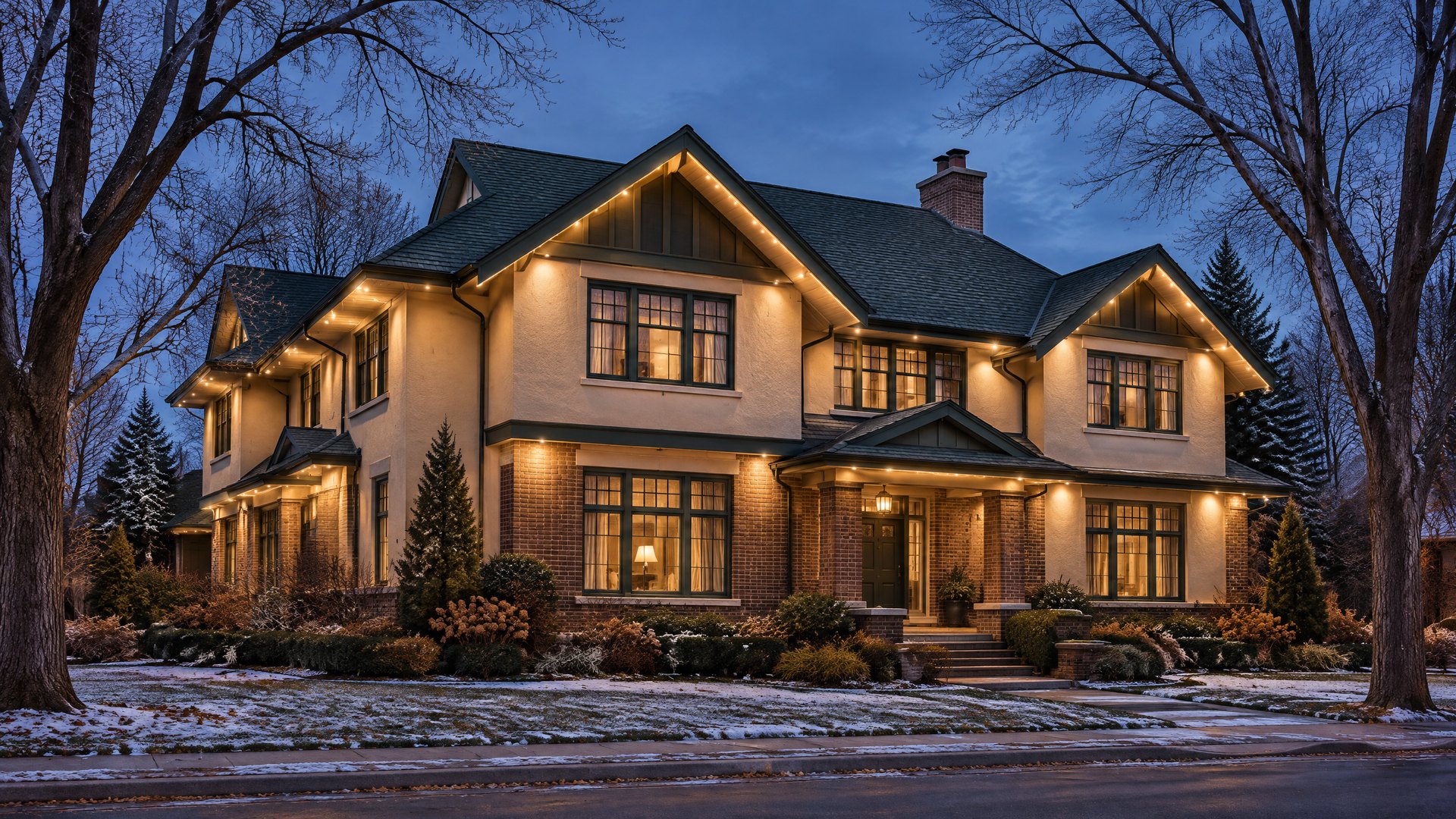
Three neighbourhoods, three different starting points
An estate-home guide should not assume every address has a mansion, an elaborate roof or a heritage designation. These neighbourhood names provide context, but the useful decisions happen at the house: its age, exterior materials, roof geometry, trees and relationship to neighbouring windows. A restrained installation on a smaller home deserves the same planning as a long frontage with several gables.
Mount Royal: distinguish the broader Mount Royal area from Upper Mount Royal and Lower Mount Royal. They are distinct communities, not interchangeable descriptions of one housing type. For a detached estate property, begin with the main elevation and assess secondary wings separately. For a shared or multi-unit property, establish who controls the exterior before discussing mounting. The City's West Elbow heritage guidance identifies concentrations of heritage assets in both Upper and Lower Mount Royal; it does not make every home designated.
Elbow Park: heritage character makes the relationship between lighting and original detailing especially important. Where a home has decorative eaves, substantial porch trim or a prominent entrance, those elements should remain readable without a competing line across them. The Elbow Park Residents Association's heritage guidance directs owners to City-defined Heritage Guideline Areas. A heritage-sensitive design approach is not the same thing as confirming a property's legal designation or obtaining approval.
Britannia: mature properties call for a design that considers planting as well as the building. CREB's Britannia neighbourhood feature describes varied housing, including mid-century bungalows and ranch-style homes alongside newer contemporary houses. A low, broad eave needs a different visual rhythm from a tall, angular replacement home. Check the sightline from the pavement and driveway; mature branches may change what is visible when leaves return.
Make daylight placement part of the design
Frontline uses fully encased aluminum tracks, colour-matched to the mounting surface. Matching the surrounding soffit or fascia helps the installation sit quietly against the house. It does not make the equipment invisible. Track position, viewing angle, surface texture and transitions at corners all affect what you will notice during the day.
Ask to review the proposed route from two viewpoints: standing near the entrance and looking back from across the street. A location that looks discreet from the kerb may be more noticeable beneath a shallow porch. On a home with several trim colours, confirm which surface each track section will match rather than choosing one colour for the entire exterior.
On older buildings, discuss the mounting surface before agreeing to the layout. Painted wood, decorative trim and repaired sections may need different consideration. Do not assume a no-drill installation or a mounting method that leaves no trace. If heritage restrictions, covenants, condominium rules or homeowners' association requirements apply, settle them before work begins. Ask the relevant authority about the actual proposed work, not simply whether “Christmas lights” are allowed.
Choose the rooflines that earn their place
A larger facade does not automatically benefit from more illuminated edges. Start with the principal roofline and entrance, then decide whether the garage or a secondary gable adds balance. Leaving some sections unlit can help the main elevation remain clear. This is particularly useful when a property has several additions or roof levels that are not equally visible from the street.
The MAG system uses 8-inch LED spacing: neighbouring light points sit eight inches apart along the track. That describes the distance between LEDs, not the width of light on the wall. On a long, straight eave, the regular spacing creates a repeating line; near a return or change in roof direction, the proposed layout deserves a closer look.
For example, consider a broad bungalow with a projecting garage. A sensible first design might follow the main eave and entrance while leaving the garage's side return unlit. For a two-storey home with several gables, compare a main-roofline option with a fuller design. These are planning examples, not descriptions of completed customer installations.
MAG offers illumination up to 40 ft. Treat that as a capability to discuss against the actual elevation, not a promise of a uniform wash over every wall or certification for installation at any height. Roof projection, placement, obstructions and the selected setting affect the appearance. Ask what the proposed lighting will highlight on your house.
Warm white most nights, colour when it matters
For many estate properties, warm white is the most useful everyday starting point. It can give the roofline a welcoming presence without making an ordinary evening feel like an event. Review it alongside existing porch and landscape lighting; even a pleasing roofline can feel disconnected if the entrance uses a noticeably different light.
Full colour gives the same permanent system a different role at Christmas, Canada Day or a family celebration. You do not have to use a moving pattern to enjoy that flexibility. A simple colour selection can be enough, particularly where the architecture already has strong detailing. Save a quiet everyday setting before exploring seasonal options.
App control and schedules let you choose when the lights operate without going outside to adjust them each evening. Build a schedule around how you use the house, then set an off time that respects nearby bedrooms. Ask for a demonstration of changing a colour, recalling your preferred warm-white setting and editing the schedule. Everyone who will use the app should be comfortable with those basic steps.
What to settle before installation day
Frontline's permanent lighting is installed within 12 hours in most cases. That is a typical installation timeframe, not an unconditional deadline for every estate property. Site complexity, weather and safe access can change the plan. A tall facade behind mature landscaping requires a different assessment from an open, single-storey frontage.
Tell the team about narrow side yards, locked gates, retaining walls and areas where equipment cannot be placed. Identify delicate garden beds and any surfaces you want protected. If access crosses shared land or a neighbour's property, establish the permissions in advance. Do not assume that reaching a roofline from the street will be straightforward simply because the lights will be visible there.
Before the appointment, agree on the included elevations and any sections intentionally omitted. Discuss the control equipment location, the proposed cable route and the electrical connection arrangements. Those details belong in the installation conversation rather than being left to a last-minute decision beside the house.
On installation day, the crew confirms the agreed roofline and access before fitting the colour-matched tracks beneath the selected eaves. The work follows the planned corners and transitions rather than adding new sections without discussion. After the lighting is connected, the team tests the selected runs and walks you through the app. The physical fit and the handover both belong in the installation plan.
At handover, walk through the installation with the team. Look at corners and transitions, confirm the selected track colour and practise the app controls. Keep the approved layout and warranty documents with your home records. If the installation finishes before dark, ask how to address any questions that arise once you have seen your everyday setting after sunset.
Know who supplies the system and who backs the work
Frontline is the largest distributor for Magnificent Lighting (MAG). MAG's permanent lighting system is installed on 6,000+ homes. That is the system's installed base, not a claim that Frontline has personally installed lighting on that many properties.
The two warranty commitments cover different responsibilities: MAG provides the 10-year product warranty, while Frontline provides the 7-year installation warranty. Product coverage and installation workmanship should not be treated as interchangeable. Ask for the written terms, including applicable conditions, exclusions and the process for reporting a concern.
Keep the product and installer information together so you know where to start if something needs attention. For a clearer explanation of these roles, read who backs your warranty. During the consultation, ask how a concern is assessed and how the responsible party is identified.
Send the information that makes a quote useful
Clear photographs are more helpful than a neighbourhood name alone. Include a straight-on view of the front, angled views showing roof returns and a closer image of the intended mounting surface. Mention which sides you want lit and whether the garage is attached or separate. Avoid climbing to take photographs; ground-level views are the starting point.
Also describe your preferred everyday look and any known approval requirements. If you are undecided about coverage, request a focused front-elevation plan and an expanded alternative. That makes the difference between the options understandable. Our Calgary permanent Christmas lighting guide provides a broader introduction to the system before you discuss the details of your home.
Estate-home lighting questions
Do I need heritage or HOA approval before installing permanent lights?
Requirements depend on the property and proposed work. Check municipal heritage status and applicable Heritage Guideline Areas, plus any covenant, homeowners' association or condominium rules. Being in Mount Royal, Elbow Park or Britannia does not itself establish approval requirements. Confirm the mounting proposal with the relevant authority before installation.
Will the tracks be visible during the day?
They may be visible, especially at close range. Fully encased, colour-matched aluminum tracks are intended to blend with the mounting surface, but visibility depends on placement and viewing angle. Review the route around entrances and decorative trim rather than relying on a promise of invisibility.
Can you install on a two-storey home or an estate property with difficult access?
The team needs to assess roof height, equipment access, landscaping and site conditions before confirming the approach. Share photographs and access restrictions early. Installation is completed within 12 hours in most cases, but complex sites, weather or access limitations can change that timeframe.
Can I use warm white normally and full colour for holidays?
Yes. The system supports warm-white everyday settings and full-colour holiday settings, with app control and scheduling. Ask the team to help save a preferred everyday look and demonstrate how to change it. Choose operating hours that suit your household and neighbouring windows.
What warranty comes with the system and installation?
MAG provides the 10-year product warranty, and Frontline provides the 7-year installation warranty. These are separate commitments. Request the written terms and keep them with your installation records so you understand the applicable coverage, conditions and route for reporting a problem.
What should I provide to get a quote?
Send ground-level photographs showing the rooflines, mounting surfaces and access, along with the elevations you want illuminated. Mention known heritage or ownership requirements and your preferred everyday appearance. You can start with a virtual estimate or book a free consultation to discuss the property.
Local sources
Local context comes from the City's West Elbow heritage guidance, the Elbow Park Residents Association's heritage guidance and CREB's Britannia feature, linked beside the relevant claims above. These sources inform neighbourhood context; they do not replace property-specific approval advice or a site assessment.
Plan lighting that belongs on your home
If roofing, soffit repairs or exterior painting are already planned, mention that before setting an installation date. Agree on the sequence with the people doing the work so a newly fitted track does not become an obstacle. For a home with older trim, resolving the condition of the mounting surface first is more useful than rushing to meet a holiday deadline.
Start with the architecture, the everyday setting you want and the rooflines worth highlighting. Book a free consultation with Frontline to discuss placement and access, or request a virtual estimate. The virtual pre-quote starts with satellite measurement and a video call; ground-level photographs can help explain your priorities. It is an initial planning step, not a substitute for confirming site conditions and the final scope.